
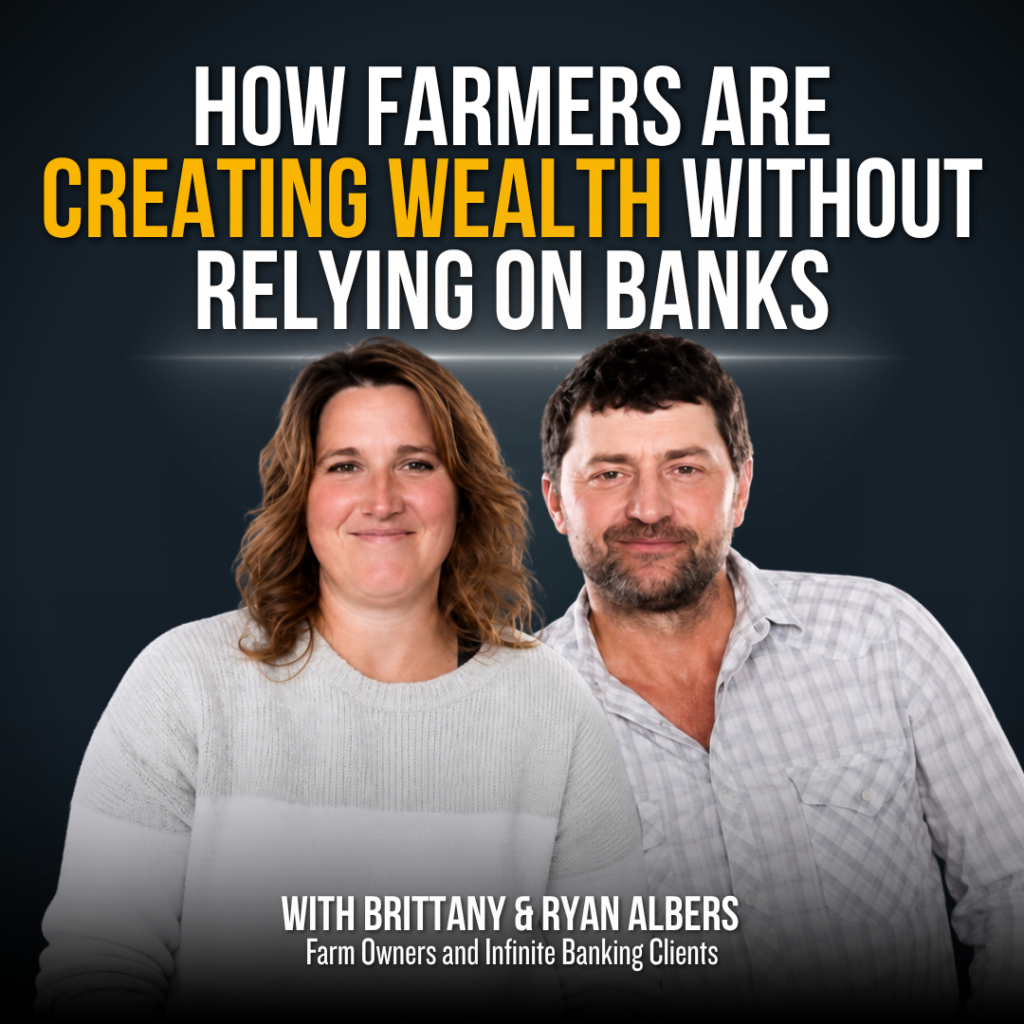




When people picture farming, they picture open fields, tractors, and sunsets. What they don’t picture is one of the most capital-intensive businesses on the planet, millions of dollars tied up in land, equipment that can cost as much as a family home, and banks that “somehow always seem to know exactly when your payment is due.” Jayson Lowe and Richard Canfield sit down with Dan Allen, co-author of Growing Your Own Capital, and his clients, Ryan and Brittany, a young farming couple near Strathmore, Alberta, to talk about what changed once they took control of their own capital.
Why is farming one of the most capital-intensive industries?
As Jayson puts it, “you’ve got millions of dollars tied up in land, equipment that in some cases can cost as much as a family home, commodity prices that can change literally overnight, and banks that somehow always seem to know exactly when your payment is due.” Ryan adds that buying even a quarter of land to start farming in Alberta runs “anywhere from half a million to a million plus” and banks tend to be cautious extending credit to young farmers at that scale: “more than once we’ve been told from a bank that they’ll match our capital on hand, so that growth is very slow.”
How did Ryan and Brittany first discover the Infinite Banking Concept?
Ryan heard about it on a beef-industry podcast featuring Mary Jo Irmen, then researched Canadian options and found Dan. Brittany’s reaction was different at first: “I didn’t really understand the concept good enough, and I did brush it off for about a good 9 months. He had suggested it, and it didn’t click in my brain.” It was ultimately one of Dan’s own videos, showing real numbers and a policy’s projected growth over 5, 10, and 20 years that made it click for her: “I needed to see the visual, the numbers, not just the talk… I gotta see it to believe it.”
What did Nelson Nash call that waiting period?
Dan and the hosts refer to this as “the process of ruminating,” a term Nelson Nash himself used. As Jayson explains, “sometimes people do need to gestate an infinite banking baby effectively to get going with the process.” Ryan and Brittany’s 9 months wasn’t unusual. They don’t regret taking the time: “we researched and dug into it and knew a little bit more what we were going to get into,” Brittany says, though she’s also clear that for anyone else considering it, her advice is simply “just do it.”
What opportunity did their capital let them act on?
The clearest example in the episode: a purebred Dorset sheep flock that came up for sale on Facebook Marketplace out of Saskatchewan. “It was too good of an opportunity to pass up,” Brittany says. “But if we had a loan that was due with the borrowed money, we would not have been able to do it. Because we had the infinite banking in place, it was possible to divert stuff and change our plans and just keep going.” The purchase moved their operation into purebred genetics for the first time, opening up a new marketing angle for the farm.
Why does the timing of a loan payment matter so much in farming?
Ryan explains that with a conventional bank loan, “you knew it was coming,” a fixed due date regardless of what’s happening with commodity prices or cash flow that season. With a policy loan, there’s flexibility: “maybe it goes 2 years that we can get that money paid back, and that pressure is off of us.” That flexibility, he says, is what’s helping their operation grow faster, since they’re not forced to sell a commodity at a bad price just to make a scheduled payment.
How has this changed how Ryan and Brittany talk about money as a couple?
Brittany describes a real shift: “Our business has evolved so far in a year where we literally just like hid everything. You don’t talk about finances. That’s a scary topic. To now where it’s just head-on… it kind of excites us now to talk finances.”
Why does this matter for their daughters?
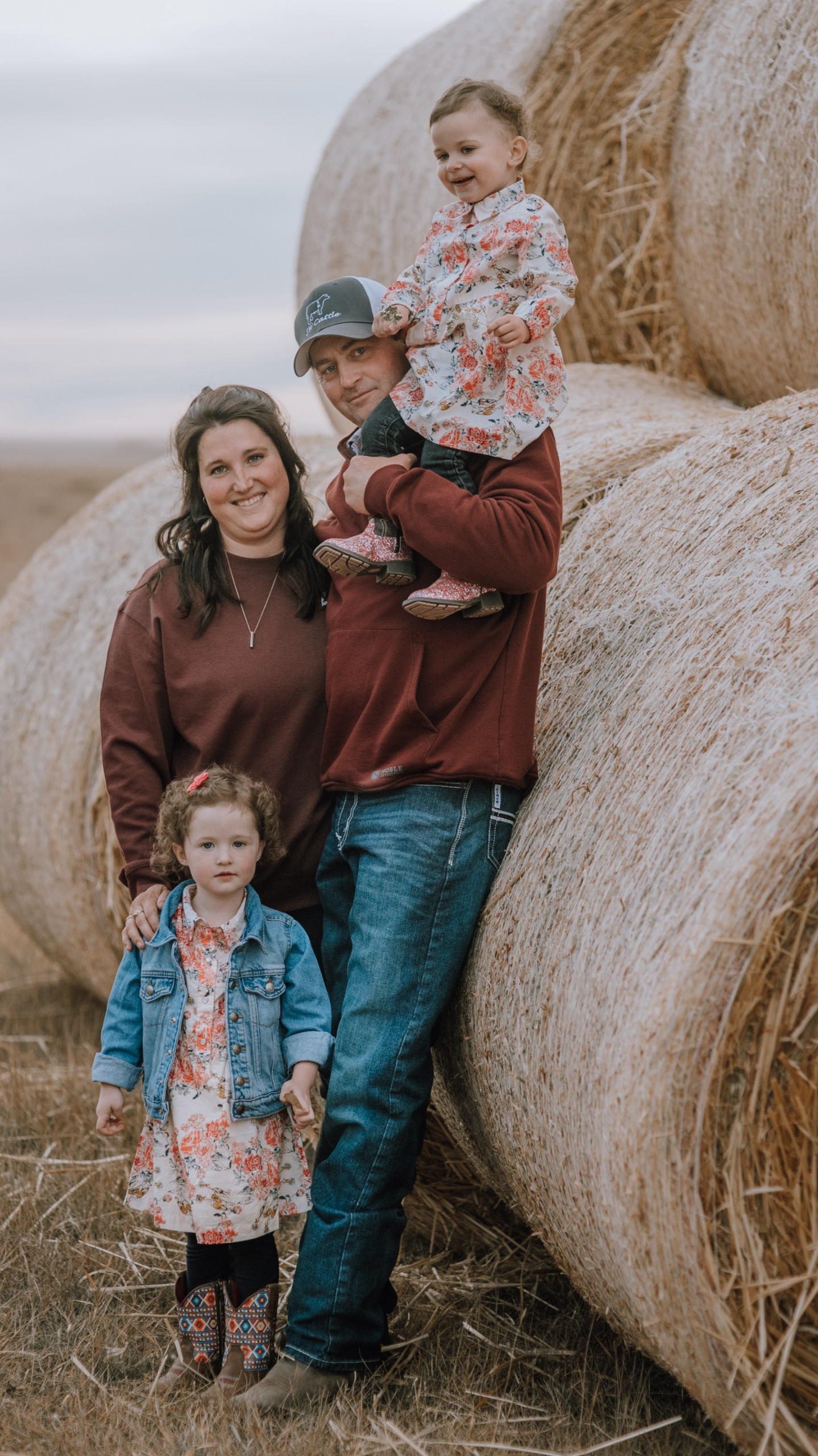
Dan shared that he wants to raise his own daughters “to have choices but not obligations” and Ryan and Brittany are building toward something similar. They’re intentionally structuring their farm’s succession so that if one daughter wants to farm and the other doesn’t, neither is put in an unfair position. Ryan has seen what happens when that planning doesn’t happen: “It’s divided the family a little bit. Nobody will talk about it, but it has. It’s been a thorn in my side.” Brittany adds plainly: “There’s not going to be a family divide over the business that me and Ryan have started.”
Who do Ryan and Brittany most want to be a hero to?
Asked who they’d most wish to be a hero to, their answer was immediate: “Our girls.”
Frequently Asked Questions
Can you use the Infinite Banking Concept to fund a farm purchase without a bank loan? Yes, as this episode illustrates, Ryan and Brittany used their own policy’s capital to purchase a purebred sheep flock outright, without needing conventional bank financing or a fixed repayment schedule.
How long does it typically take to decide to start the Infinite Banking Concept? It varies. Brittany and Ryan took about 9 months from first hearing about it to fully committing, a period Nelson Nash referred to as “ruminating.” Dan and the hosts note this isn’t unusual.
Is agriculture a capital-intensive industry? Yes, significant capital is tied up in land and equipment, with unpredictable variables like weather and commodity prices adding further risk, which is part of why controlling access to capital matters so much for farming families.
How can a family structure Infinite Banking to help with farm succession planning? By building capital that isn’t tied to the farm’s day-to-day operation, families can create more flexible options for succession; for example, ensuring that one child who wants to farm and another who doesn’t can both be treated fairly without dividing the family or forcing a sale.
Watch the full episode on YouTube, or listen on Spotify
Get the free book, Growing Your Own Capital, at growyourowncapital.com.