



How long do you suppose a skyscraper would stand on a weak foundation?
That’s the question Nelson Nash, the founder of the Infinite Banking Concept, asked Jayson Lowe the first time they spoke at a conference. Decades later, it’s still the question that separates people who actually understand Infinite Banking from people who are just shopping for a better insurance product.
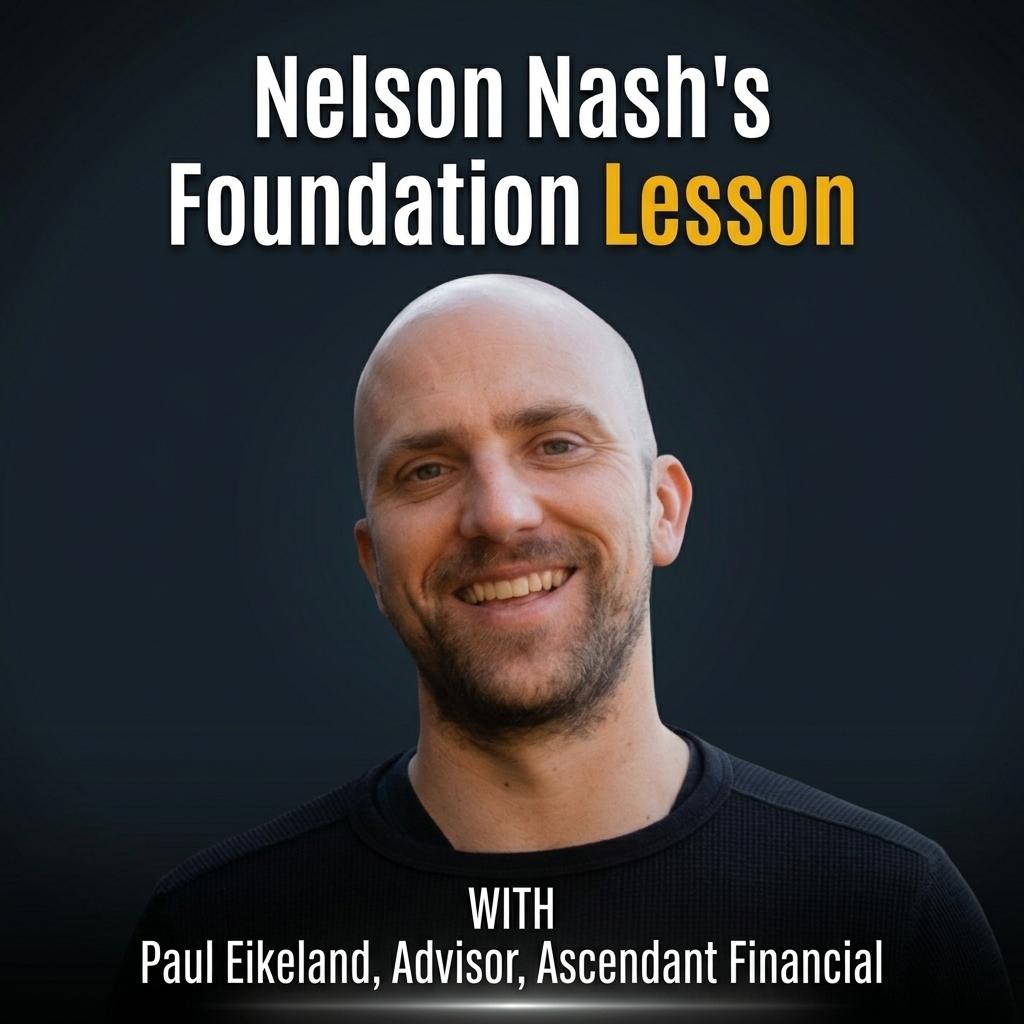
In a recent episode of Wealth on Main Street, teammate Paul Eikeland flipped the format and interviewed Jayson Lowe and Richard Canfield about their personal history with Nelson Nash and what his teaching really meant.
Here’s what came out of that conversation.
Who Was Nelson Nash?
Nelson Nash wrote Becoming Your Own Banker, the book that introduced the Infinite Banking Concept to the world. As Richard Canfield put it on the episode, Nelson is “the reason we’re all here, to be quite frank.” He passed away in 2019, but his framework is still the foundation for how Ascendant Financial teaches people to think about controlling their own capital.
Jayson Lowe has been working with the Infinite Banking Concept for close to 19 years. Richard Canfield, 16 to 17 years. Both credit Nelson directly for shaping how they think about money, not just what they know, but how they arrived at knowing it.
As Jayson puts it: “I’m not self-made. I’m mentor-made.”
Why Nelson Compared Infinite Banking to a Skyscraper
Here’s the core lesson, in Nelson’s own framing, as Jayson recalls it:
“How long do you suppose a skyscraper would stand on a weak foundation?”
Nelson’s point wasn’t really about buildings. It was about people. He noticed that most people trying to learn Infinite Banking skip straight to comparing insurance products, arguing about interest rates, and debating policy design — all “floors” of the skyscraper, without ever laying the foundation first.
The foundation, in Nelson’s teaching, is understanding the difference between a process and a product.
- A product is the whole life insurance policy itself, the paperwork, the numbers, the illustration.
- A process is the discipline of becoming your own source of financing, recapturing the interest and fees you’d normally pay to a bank, and redirecting that money toward yourself over time.
Nelson’s warning: if you don’t understand the process first, no amount of product knowledge will make Infinite Banking work the way it’s supposed to.
As Jayson remembers Nelson saying: “It’ll take about 11 minutes on the internet before you start running into comparisons on products and discussions around interest rates.” People rush the floors and skip the foundation, and then wonder why the whole thing feels unstable.
Why the Infinite Banking Concept Is Supposed to Be “Ridiculously Simple”
This is one of the most repeated lines from Nelson, according to both Jayson and Richard: the Infinite Banking Concept is meant to be ridiculously simple.
That simplicity gets lost the moment people turn it into a debate about which insurance carrier has the best dividend history, or which rider is technically superior. Nelson’s actual teaching was less about the mechanics of a policy and more about a mindset shift: control your own capital instead of routing your money and the associated interest, through someone else’s bank.
What Nelson Meant by “You Are the Environment You Operate In”
Another core teaching Richard shared from Nelson:
“No one elevates himself or herself much above the environment in which they operate.”
Nelson’s point: your financial thinking is shaped by the people, media, and institutions around you, whether you notice it or not. If your environment is full of conventional banking assumptions, debt-normalizing culture, and “buy now, worry later” messaging, that’s the “operating system” your financial decisions run on, whether you agree with it or not.
Nelson called the result of that unquestioned environment “stinkin’ thinkin'” patterns of financial belief absorbed passively, never actually chosen. Changing your environment, in Nelson’s view, is like getting a new hard drive dropped into your head. It’s not about trying harder within the same system, it’s about deliberately choosing a different set of inputs.
This is also, according to Jayson and Richard, why community matters so much in how Ascendant Financial operates. If your environment shapes your thinking, then who you surround yourself with directly shapes your financial outcomes.
Why Community Is Core to the Infinite Banking Concept
Nelson’s book, Becoming Your Own Banker, doesn’t just teach the mechanics of a policy, it makes the case for building what Jayson and Richard describe as a “wealth club”: a group of like-minded people, learning and reinforcing the same principles together.
Jayson explained why isolation is the real risk: “It’s when we’re alone that’s the most dangerous place to be.” Left alone with financial decisions, people default back to their existing environment, the one Nelson warned about. Community interrupts that default.
That’s part of why Ascendant Financial built out a Facebook community (currently over 3,200 members) and regular events not as an add-on, but as an extension of Nelson’s original teaching about environment and process.
The Bigger Legacy Question: What Should Last 100 Years?
Toward the end of the conversation, Paul asked Jayson and Richard what they’d want people to say about the Ascendant community decades from now, not next year, but 50 or 100 years out.
Richard’s answer centered on feeling: he wants people who show up and participate to walk away feeling supported, with both fun and real growth built into every interaction.
Jayson’s answer looked further out, toward generational transfer. Not just of money, but of a mentality: generational wealth mentality, generational ambition, generational character. As he put it, the goal isn’t “just a check” passed down, it’s a way of thinking passed down.
Frequently Asked Questions
Who was Nelson Nash? Nelson Nash was the author of Becoming Your Own Banker and the founder of the Infinite Banking Concept, a framework for using whole life insurance to become your own source of financing rather than routing interest and fees through a traditional bank.
What is the difference between a process and a product in the Infinite Banking Concept? The product is the whole life insurance policy itself. The process is the underlying discipline of recapturing the interest you’d otherwise pay to a bank and redirecting it to yourself over time. Nelson Nash taught that understanding the process must come before comparing products, otherwise the “foundation” is missing.
Why did Nelson Nash say the Infinite Banking Concept is “ridiculously simple”? Nelson believed people overcomplicate Infinite Banking almost immediately by jumping into product comparisons and interest-rate debates online, rather than first understanding the underlying process and mindset shift the concept is built on.
Why is community important in the Infinite Banking Concept? Nelson Nash taught that no one rises much above the financial environment they operate in. Community exists to create a supportive environment that reinforces good financial thinking, countering the isolation and default assumptions people absorb elsewhere.
What does “stinkin’ thinkin'” mean in Nelson Nash’s teaching? It refers to financial beliefs and habits absorbed passively from your surrounding environment, without ever consciously choosing them. Nelson taught that changing your environment is necessary to change this kind of unexamined thinking.
Watch or Listen to the Full Conversation
Search “Wealth on Main Street” on YouTube for the full episode, or find it on Spotify and Apple Podcasts.
🔗 Join the community: wealthonmainstreet.com/community 🔗 See upcoming events: wealthonmainstreet.com/events