



Additionally, this post shares one Canadian client’s experience for education. However, this is not insurance, financial, legal, or tax advice. Rules and timing vary by insurer, province, and country. Some personal details are left out on purpose; the full episode includes more, as shared by the guest.
Policy Loans and Medical Emergencies: A Case Overview
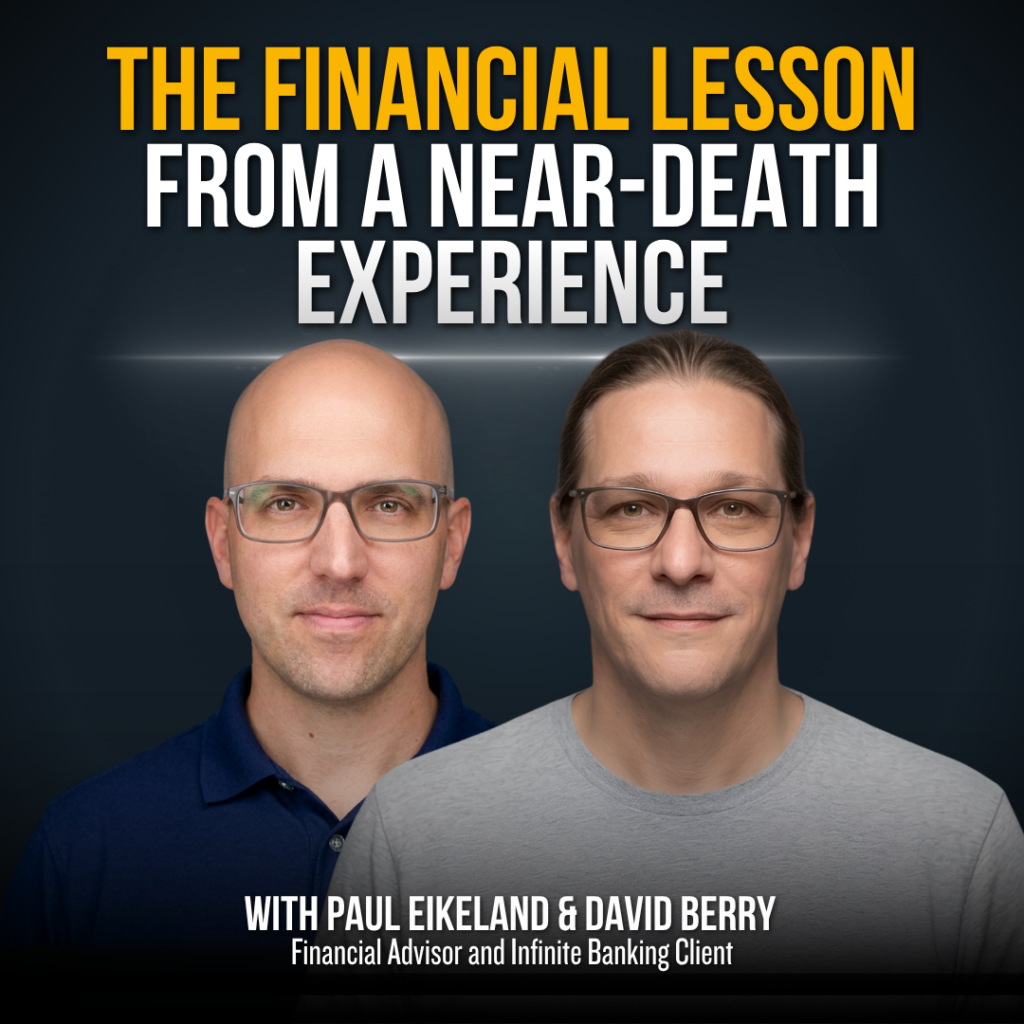
David Berry’s income dropped after a medical emergency. He was a Canadian client of advisor Paul Eikeland at Ascendant Financial.
Additionally, he used a policy loan to cover a year of car insurance. This example shows How a Life Insurance Policy Loan Helped After a Medical Emergency. It illustrates how such loans can help manage sudden costs. In this conversation with host Richard Canfield, he explains how. Richard explains why ‘approved’ isn’t the same as ‘binding’.
- One client’s account: a policy loan covered a year of car insurance after government sick benefits took about a month and a half to start (his experience, not a guarantee).
- In Richard Canfield’s explanation, a life insurance policy can be approved and still not be binding. He says it needs money paid (“consideration”) and every party’s signature.
- Application timelines vary. Richard says about 30 days is common, and an APS report can add 30 to 90 days.
- Richard’s advice to parents: don’t hand a child a policy without several years of education first.
Can you borrow against whole life insurance to pay bills?
David Berry, a client of advisor Paul Eikeland of Ascendant Financial, says that after he went back to work, he was behind. Paul pointed out that the policy was only a few months old and likely had enough in it to take a loan. It turned out to be just enough to cover his car insurance for the next year, and he budgeted the repayments. David calls it “kind of a no-brainer.” One client’s experience, not a guarantee; policy loans have terms and costs, so talk with your advisor.
How long do government sick benefits take to start, and how much do they replace?
David says he applied for sick benefits through the government and, with the paperwork, it took “about a month and a half” before money started to arrive. His savings covered the gap. With a top-up from his workplace through his union, he says the combined amount was “only maybe 40%” of his actual income. The episode doesn’t name the program, and timelines differ by program and province, so treat this as his account.
Why would someone name a sibling as their life insurance beneficiary?
David says his sister takes care of their mother day to day, and he helps where he can. When he set up the policy, naming her as beneficiary was “a no-brainer” because of everything she does.
When does a life insurance policy become legally binding?
Richard calls this the key teaching point of the conversation. In his explanation, “contracts are not legally binding without consideration,” meaning there has to be money on the table, and every party has to sign. He says a policy can be approved and ready to go, yet until the money has left your bank account it isn’t legally bound. Insurers can set their own conditions too, and some also ask that nothing about your health has changed between application and delivery, so confirm the steps with your advisor or insurer.
Why shouldn’t you drag your feet once a policy is approved?
Richard says people stall because everyday life gets in the way: logging into the bank, setting up the insurance company as a payee, getting the kids to practice. His advice: “If you’ve got an approval for insurance, do not drag your feet. Bind that contract, lock that thing in,” because “we don’t have a lease on life and we don’t know what tomorrow holds.” You can’t control your health, but you can control how quickly you complete the steps.
How long does it take to get approved for life insurance?
Richard says about 30 days is typical, “give or take.” He’s seen approvals in a couple of days (rarely), in two weeks, and sometimes around 120 days. David’s, he says, was unusually quick. Timelines vary widely by insurer, policy type and how much medical review is needed.
What is an APS report in life insurance?
An APS is an attending physician’s statement: the insurer’s third-party company asks a doctor’s office for a report on the applicant. Richard says that step can add another 30, 60 or 90 days, and if the first report isn’t specific enough, the insurer asks for more and the cycle starts over.
What happens if you become uninsurable before your policy is in force?
Paul says he meets people who are healthy one day and, by the next meeting, temporarily or permanently uninsurable, which can mean finding a different life to insure. He says Nelson Nash was permanently uninsurable from 1987 on but kept adding policies on younger family members, including a great-grandchild (Paul’s account, not independently verified). Nash died in March 2019, aged 88.
What does a term rider do on a whole life policy?
Paul says the term insurance attached to David’s policy can be converted down the road to build the system further, a plan made at the start with the future in mind. Richard adds that term is “one component of a tool,” like swapping drill bits on a single tool. The exact conversion terms depend on the contract.
What is Nelson Nash’s heart-lung machine analogy for money?
Richard retells how Nelson Nash used it in workshops: a heart-lung machine does everything a heart does, but only marginally, just enough to keep you going. Nash’s point, as Richard tells it, is that most of society lives on the financial equivalent, barely getting by without realizing what other tools exist. Taking control, in Nash’s framing, means getting yourself off the machine.
Should you give your child their whole life insurance policy when they turn 18?
Richard says many parents set up policies on their children, and the children later cash them in, because the parent hands them over like “the keys to a chainsaw” without explaining the safety measures. His advice: don’t hand it over without first spending several years educating them on the stewardship of what it is. David says his own father had a policy on him, and when it was handed over at 17 or 18 he cashed it out and “ran with the money” before he understood it.
Can you borrow from a life insurance policy for a down payment on a house?
Richard, who says he was a licensed realtor for about 10 years, recalls a first-time buyer who needed a little more to get over the hump. He accessed a policy loan from a policy his parents had set up 25 years earlier. Richard recalls the amount as about $5,000 and says it covered the lawyer and closing costs. One anecdote, not a guarantee.
How did David find infinite banking?
He says he saw a few YouTube Shorts on the concept, ordered Becoming Your Own Banker by Nelson Nash and read it in under two days, then researched further before reaching out to Paul through the website.
Free resources mentioned in this episode
- Don’t Spread the Wealth (free book): https://dontspreadwealth.com
- 7 Simple Steps report (free): https://7steps.ca
- Cash Follows the Leader (free book): https://cashfollows.com
- Growing Your Own Capital (free book): https://growyourowncapital.com
- Becoming Your Own Banker by R. Nelson Nash (mentioned by David and Richard): https://shop.ascendantfinancial.ca/product/becoming-your-own-banker/
More from the Client Series: https://www.youtube.com/show/VLPLrPXvAvhODwgqE_DKykxPlqC9QRFIbmfJ?sbp=Kgtfbkh4cFBIWlFaMEAB