
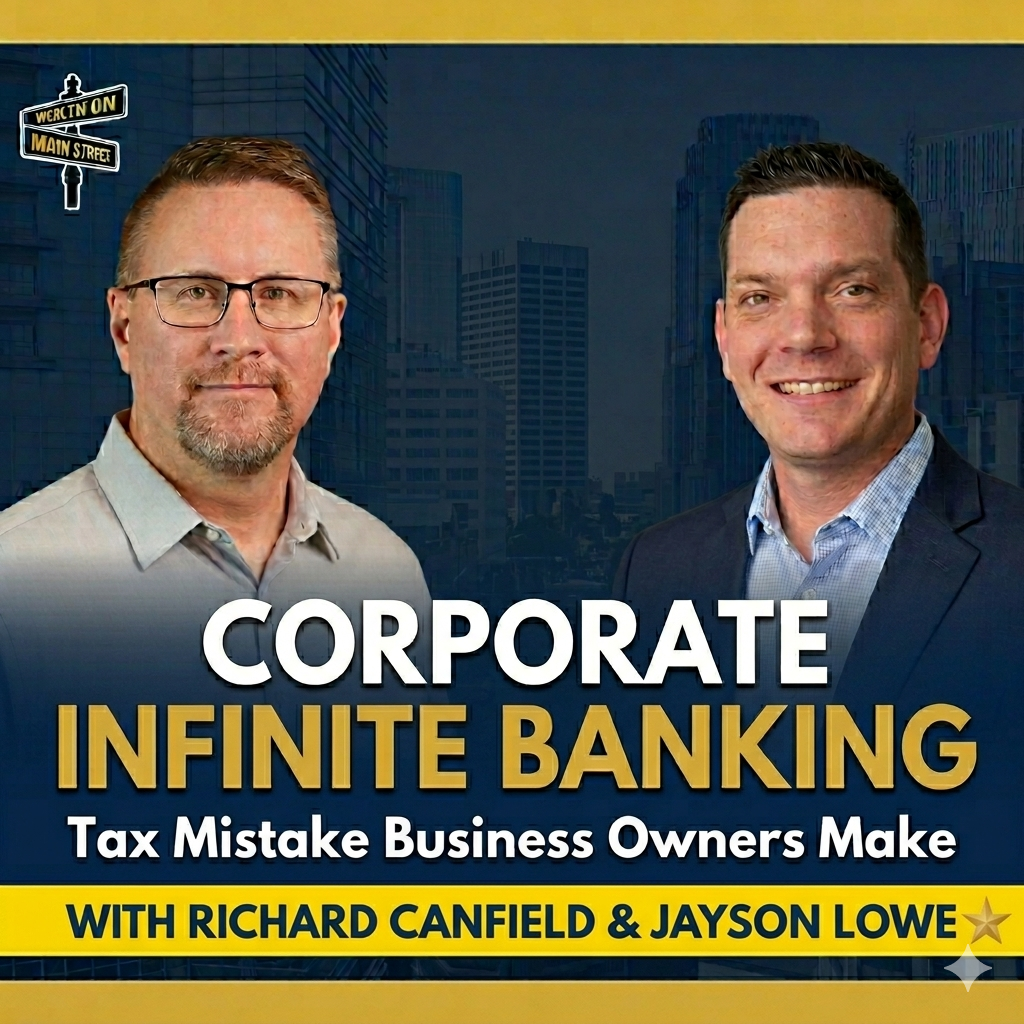




Many Canadian business owners hear the same message online. Use corporate Infinite Banking strategies, borrow against whole life insurance, and access money tax-free forever.
It sounds simple. In some cases, it can work very well. However, many people do not understand the risks behind these strategies.
Without proper planning, a powerful financial tool can become a massive CRA problem later. Some experts even describe it as a “nuclear tax bomb.”
In this article, we break down how Cash Surrender Value (CSV) lines of credit work, why the CRA watches these strategies closely, and what business owners must understand before moving forward.
The Problem With Simplified Financial Advice
Social media often turns complex financial strategies into quick sound bites. That creates problems.
Many videos make corporate Infinite Banking look easy. They promise tax-free retirement income, endless borrowing power, and no consequences.
Real financial planning does not work that way.
Strategies involving whole life insurance, corporate ownership, and policy loans require careful structuring. They also need proper documentation and long-term planning.
Without those elements, business owners may face unexpected taxes later in life or after death.
That risk increases when people copy advice from short online clips without understanding the details behind the strategy.
What Is a CSV Line of Credit?
A Cash Surrender Value line of credit works like a home equity line of credit. Instead of using your house as collateral, the lender uses the cash value inside a whole life insurance policy.
As the policy grows, the available credit usually grows too.
Banks like these arrangements because whole life insurance provides stable collateral. The cash value typically increases every year, and the death benefit supports the lender’s security.
Depending on the lender, business owners may borrow between 50% and 100% of the available cash value.
Some lenders allow interest-only payments. Others allow the interest to accumulate over time.
While that flexibility sounds attractive, it can also create serious long-term problems if the structure is wrong.
Why the Adjusted Cost Basis Matters
In Canada, the Adjusted Cost Basis (ACB) of a life insurance policy changes over time.
Early in the policy, the ACB usually stays high. As the policy matures, the ACB gradually drops while the cash value keeps growing.
This creates an important crossover point.
Once the ACB falls below the total cash surrender value, taking money directly from the policy may create a taxable gain.
That is why many advisors recommend borrowing against the policy instead of withdrawing funds directly.
When structured properly, a CSV line of credit may allow business owners to access capital without triggering immediate tax consequences.
However, “structured properly” is the key phrase.
The Hidden CRA Risk Behind Corporate Infinite Banking
Many corporate Infinite Banking strategies focus on using a corporately owned policy to fund personal spending.
That is where problems often begin.
Imagine a business owner borrows $100,000 per year against a corporate policy. Over time, the debt grows to $1 million or more. Interest may also compound if it is not paid annually.
During the owner’s lifetime, everything appears to work smoothly.
The owner enjoys tax-free access to money. Vacations, investments, and lifestyle expenses all seem covered without paying personal tax.
Then death occurs.
The insurance company usually pays the lender first because the policy secures the loan. After that, the CRA may treat the borrowed amount as taxable income on the deceased’s final tax return.
That creates the “tax bomb.”
In some cases, families discover a massive tax liability at the exact moment they expected the insurance strategy to protect their wealth.
Why CRA Scrutiny Matters More Than Ever
The CRA pays close attention to aggressive tax strategies involving corporations and insurance.
Many advisors promote these structures as completely safe or fully tax-free. That message can mislead business owners.
The CRA often looks beyond the marketing language. Instead, it examines how the strategy actually works.
For example, the CRA may ask:
- Who benefited from the borrowed money?
- Was the corporation securing personal debt?
- Was there proper repayment documentation?
- Did the structure follow attribution rules?
- Was there a legitimate business purpose?
If the answers create concern, the CRA may challenge the arrangement.
That process can become expensive and stressful for surviving family members.
CSV Lines of Credit vs. Immediate Financing Arrangements
Many people confuse CSV lines of credit with Immediate Financing Arrangements (IFAs). They are not the same thing.
A CSV line of credit uses the policy’s cash value as collateral for borrowing.
An IFA usually involves a demand loan. That means the lender may request repayment at any time.
This difference matters.
Business owners should fully understand:
- Repayment terms
- Lender rights
- Interest requirements
- Collateral rules
- Long-term tax consequences
Not every bank offers these products. In many cases, specialized lending departments handle them.
That makes experienced guidance extremely important.
Why Simpler Planning Often Works Better
Many wealthy families do not chase extreme tax avoidance strategies.
Instead, they focus on consistency, discipline, and long-term planning.
They use the tax code intelligently. However, they also understand that paying some tax is normal.
Trying to eliminate every dollar of tax often creates unnecessary complexity and risk.
Simple strategies are usually easier for families, accountants, and executors to manage later.
Complex structures may create confusion after death. They can also leave family members dealing with large tax bills they never expected.
Good planning should create clarity, not chaos.
Questions Every Business Owner Should Ask
Before using corporate Infinite Banking strategies, ask these questions:
- What could go wrong with this structure?
- How does the CRA view this arrangement?
- What happens when I die?
- Who repays the loan?
- Could my family face unexpected taxes?
- Is the strategy fully documented?
- Has my accountant reviewed the structure?
- What are the long-term risks?
If an advisor cannot answer those questions clearly, that is a warning sign.
The Real Goal of Infinite Banking
Infinite Banking should not focus only on avoiding taxes.
The real goal is control.
A properly designed system can help business owners:
- Improve cash flow
- Create liquidity
- Build long-term capital
- Protect family wealth
- Increase financial flexibility
However, those benefits only matter if the strategy remains stable over decades.
That requires patience, discipline, and proper education.
Final Thoughts
Corporate Infinite Banking can be a powerful financial strategy. However, it is not automatically tax-free, and it is not risk-free.
Poor structuring can create major CRA problems for Canadian business owners and their families.
Before implementing any strategy involving whole life insurance and CSV lines of credit, make sure you understand the long-term consequences.
Do not rely on simplified social media advice.
Ask better questions. Work with experienced professionals. Focus on clarity instead of shortcuts.
That approach gives you a much better chance of building lasting wealth without creating future tax disaster.
Watch the Full Episode
Want to learn more about the risks behind corporate Infinite Banking and CRA scrutiny?
Watch the full Wealth On Main Street episode here:
https://youtu.be/r6udohmADow
Listen to the full episode on Spotify
For questions or feedback, contact:
podcast@ascendantfinancial.com